


When you invest in custom solutions, you want them to work flawlessly every time. That’s where quality assurance (QA) steps in—ensuring your software meets the highest standards before it reaches your users.
But how do you guarantee that? By combining the strengths of manual testing with the efficiency of automation testing. You’ll discover how this powerful duo uncovers hidden bugs, improves performance, and saves you time and money. Ready to boost your software’s reliability and user satisfaction?
Keep reading to learn how quality assurance tailored for your custom solutions can make all the difference.
Custom solutions in quality assurance (QA) demand a different approach than standard testing. These solutions are built to fit specific business needs and workflows. Testing such unique applications requires flexibility and precision. Both manual and automation testing play vital roles in ensuring these solutions work flawlessly. Tailored QA strategies help detect issues that generic tests might miss. This process improves software reliability and user satisfaction.
Every custom solution has distinct features and requirements. QA teams must design test cases that reflect these differences. Manual testing helps explore user experience and unusual scenarios. Automation testing speeds up repetitive tasks and regression checks. Combining both methods covers all test angles. Custom test scripts often need updates as the solution evolves. This adaptation keeps testing relevant and effective.
Custom solutions bring unique testing challenges. Limited documentation can make understanding the system hard. Integration with other software may cause unexpected issues. Test environments must match real-world conditions closely. Some features are too complex for automated tests alone. Manual testers must be skilled and detail-oriented. Time constraints can pressure teams to reduce test coverage. Effective communication between developers and testers is crucial. Overcoming these hurdles ensures a high-quality product.
Manual testing is a vital part of quality assurance for custom solutions. It involves human testers who check the software for bugs, usability issues, and overall performance. Manual testing helps find errors that automated tests might miss. It ensures the product works well from a user’s perspective.
This testing type requires careful planning and attention to detail. Testers follow specific steps to explore the software deeply. They simulate real user behavior and check the system’s response. Manual testing is flexible and adapts to changing requirements quickly.
Exploratory testing allows testers to investigate without scripts. It helps discover unexpected issues early. Test case execution involves following detailed test steps to verify features. Regression testing ensures new changes do not break existing functions. Usability testing checks how easy and intuitive the software is for users.
Testers document all findings clearly. They report defects with precise details to help developers fix issues fast. Communication between testers and developers is essential. Manual testing often uses checklists and requirement traceability to cover all scenarios.
Manual testing works best for new features that need user feedback. It is ideal for complex workflows and visual elements. When the software changes frequently, manual tests can adapt quickly. It also helps test on different devices and environments.
Manual testing is crucial for usability and user experience evaluation. It detects issues that automation may overlook, such as layout problems and confusing interfaces. This testing method supports exploratory and ad-hoc testing to find hidden bugs. Manual testing complements automation by covering areas that machines cannot fully assess.
Automation testing is a key part of quality assurance for custom solutions. It uses software tools to run tests automatically. This saves time and reduces human errors. Automation testing helps catch bugs early and ensures the software meets requirements.
It works best when combined with manual testing. Manual testing checks user experience and looks for issues automation might miss. Automation handles repetitive tasks and large test cases quickly.
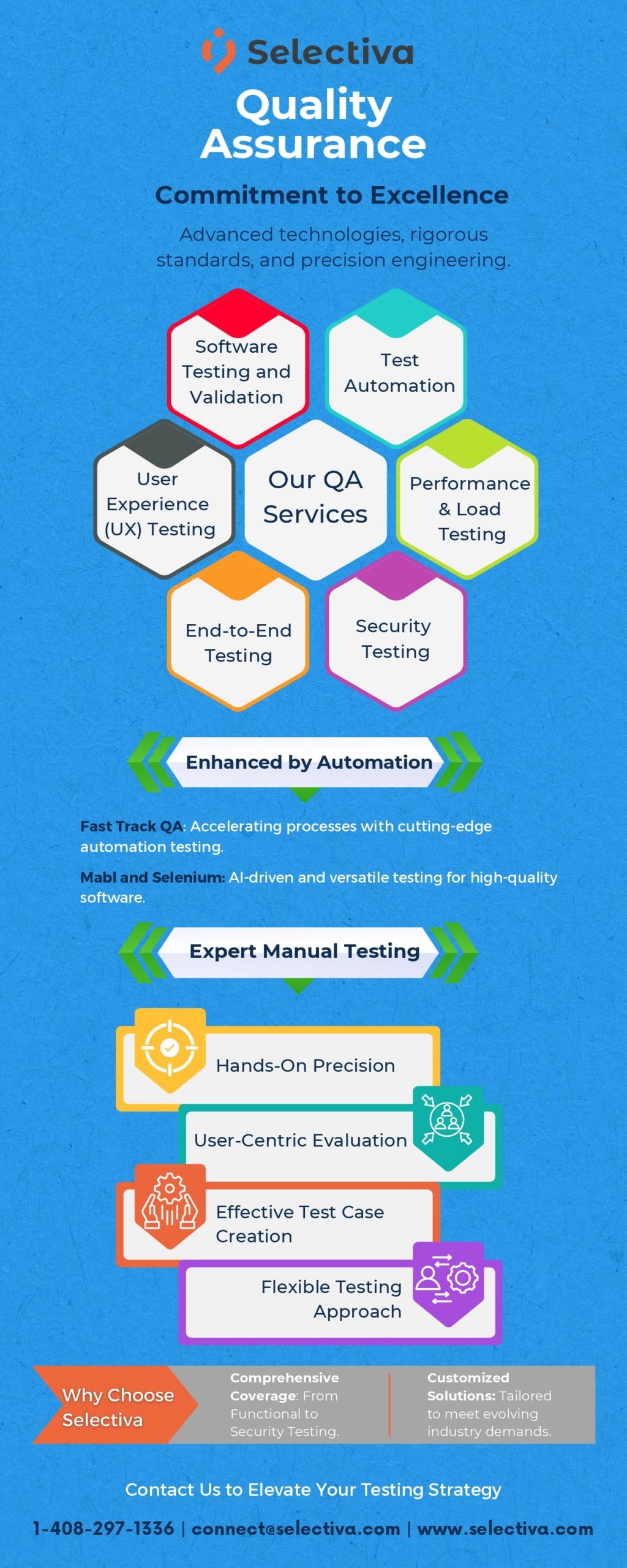
Several tools help automate software testing efficiently. Selenium is a top choice for web applications. It supports many browsers and languages. Appium works well for mobile app testing. JUnit and TestNG are popular for Java testing. Cypress offers fast testing with easy setup. These tools suit different project needs and budgets.
Automation pipelines run tests automatically during software development. They start when new code is added or changed. A pipeline includes steps like building the app, running tests, and reporting results. Tools like Jenkins, GitLab CI, and CircleCI manage pipelines. Setting up pipelines saves time and keeps testing consistent. It also helps catch problems early in the development cycle.
Credit: selectiva.com
Combining manual and automation testing creates a strong quality assurance process. Manual testing offers human insight, catching issues automation might miss. Automation testing speeds up repetitive tasks and improves test coverage. Together, they balance thoroughness and speed, ensuring custom solutions meet high standards.
Effective test planning decides which tests to automate and which to do manually. Critical features often need manual checks for usability and design. Routine tasks and regression tests fit well with automation. This mix uses resources wisely and targets testing efforts where they matter most.
Automation boosts efficiency by running many tests quickly and consistently. Manual testing adds accuracy by understanding user experience and edge cases. Combining both reduces errors and saves time. It ensures software works well under real conditions, not just in theory.
Boosting efficiency in quality assurance is vital for delivering reliable custom solutions. Efficient QA processes reduce testing time and improve software quality. Combining manual and automation testing creates a balanced approach. This mix allows teams to catch more defects while speeding up test cycles.
Efficiency means fewer delays and smoother project flows. It ensures quicker feedback and faster issue resolution. Overall, boosting efficiency in QA helps meet deadlines and keeps clients satisfied.
Manual testing relies on human effort, which can lead to mistakes. Repetitive tasks may cause testers to overlook defects or skip steps. Automation helps reduce these errors by running consistent and repeatable tests. Automated scripts follow exact instructions without fatigue or distraction.
Combining both methods allows human insight where needed and automation for routine checks. This balance minimizes errors and raises test accuracy. Quality assurance teams can trust their results more and improve software stability.
Automated testing speeds up test execution by running multiple cases simultaneously. It handles large test suites faster than manual efforts alone. This optimization frees testers to focus on complex scenarios requiring human judgment.
Manual testing complements automation by exploring new features and unpredictable behaviors. Together, they create a comprehensive test coverage. Efficient execution shortens release cycles and enhances product quality. Teams achieve better results with less time and effort.
Enhancing accuracy is crucial in quality assurance for custom solutions. It reduces errors and boosts product reliability. Combining manual and automation testing sharpens this precision. This balance ensures thorough examination and consistent validation. Accurate testing helps deliver solutions that meet client expectations perfectly.
Test coverage measures how much of the application is tested. Manual testing explores complex scenarios and user experience aspects. Automation testing runs repetitive tests quickly and broadly. Together, they cover more code and features. Full coverage prevents hidden bugs and missed defects.
Validating test results confirms tests produce correct outcomes. Automation tools compare actual results with expected values. Manual testers review ambiguous or critical results carefully. This dual check avoids false positives and negatives. Accurate validation builds trust in the testing process and product quality.
Quality Assurance (QA) plays a vital role in Agile and DevOps environments. These methodologies focus on fast delivery and continuous improvement. QA ensures that custom solutions meet quality standards without slowing down development. Both manual and automation testing fit well within these frameworks, supporting quick feedback and early defect detection.
In Agile and DevOps, QA is not a separate phase. It is part of the entire development cycle. Testers work alongside developers from the start. This collaboration helps catch issues early. Manual testing verifies user experience and complex scenarios. Automation testing runs repetitive checks quickly. Together, they keep workflows smooth and efficient.
Continuous testing means running tests at every stage of development. It helps find bugs before they cause bigger problems. Automation testing makes this possible by running tests fast and often. Manual testing adds value by checking new features and usability. Continuous testing improves product quality and speeds up releases. Teams get faster feedback and reduce risks.
Credit: www.tricentis.com
Measuring the success of Quality Assurance (QA) in custom solutions is vital. It ensures that both manual and automation testing deliver the expected quality. Tracking QA effectiveness helps teams improve processes and product reliability. Clear measurement allows better decision-making and resource allocation. It also boosts client confidence in the final product.
Key metrics provide a clear view of QA success. Test coverage shows how much of the product is tested. Defect density measures the number of issues per module. Test execution time tracks how fast tests run. Automation pass rate indicates the percentage of automated tests passed. Customer-reported defects reveal real-world product problems. These metrics highlight strengths and areas needing improvement.
Continuous feedback fuels QA progress. Testers share insights on test cases and tools. Developers provide input on defect fixes and code quality. Users report bugs and suggest enhancements. Regular review meetings help discuss findings and plan actions. Implementing improvements based on feedback raises testing accuracy. This cycle ensures QA adapts and evolves with product needs.
The future of Quality Assurance (QA) in custom solutions blends manual and automation testing with emerging technologies. The focus shifts towards smarter, faster, and more efficient testing methods. These trends help teams detect issues early and improve software quality. Understanding these future directions prepares QA professionals for the evolving landscape.
AI and machine learning are transforming QA processes. They analyze vast data to identify patterns and predict defects. Test scripts can adapt automatically based on previous results. This reduces manual effort and speeds up testing cycles. AI-driven tools help in test case generation and prioritization. They enhance accuracy and reduce human error in both manual and automated testing.
Shift-left testing means testing earlier in the software development cycle. It integrates QA into the development phase rather than at the end. This approach finds bugs sooner and cuts down on costly fixes. Developers and testers collaborate closely to build quality from the start. Automation supports continuous testing in this early phase. Shift-left improves overall efficiency and delivers more reliable custom solutions.

Credit: www.aress.com
Quality assurance for custom solutions ensures software meets client requirements. It involves both manual and automated testing to verify functionality, performance, and security. This process helps deliver high-quality, reliable software tailored to unique business needs, reducing defects and improving user satisfaction.
Manual testing involves human testers executing test cases step-by-step. Automation testing uses scripts and tools to run tests automatically. Manual testing is flexible for exploratory checks, while automation is faster for repetitive and regression tests. Combining both enhances overall test coverage and efficiency.
Combining manual and automation testing leverages the strengths of both methods. Manual testing handles complex scenarios and user experience checks. Automation speeds up repetitive tests and improves accuracy. Together, they ensure comprehensive quality assurance and faster delivery of custom software solutions.
QA automation increases test speed and repeatability. It reduces human error and enables continuous integration and delivery. Automation helps identify defects early, saving time and cost. It also supports extensive test coverage, ensuring custom solutions perform reliably under various conditions.
Quality assurance ensures custom solutions work as expected. Manual testing finds user experience issues effectively. Automation testing speeds up repetitive checks and improves accuracy. Combining both methods creates a strong, reliable testing process. This approach reduces errors and boosts software quality.
Teams deliver better products that meet client needs. Testing early and often saves time and money. Quality assurance is key to successful custom software development.







Leave A Reply Now