


Are you struggling to turn your custom project ideas into clear, manageable tasks? Without a solid plan, projects can quickly become overwhelming, causing delays and confusion for you and your team.
But what if you had a simple way to break down complex projects into easy steps everyone can follow? You’ll discover how to break custom projects into clear tasks using a proven Standard Operating Procedure (SOP). By following this straightforward guide, you’ll save time, reduce errors, and keep your project moving forward smoothly.
Ready to make your next project more organized and stress-free? Let’s dive in!
Setting clear project goals is the first step to breaking custom projects into manageable tasks. Goals provide direction and purpose. They help everyone understand what success looks like. Without clear goals, projects can become confusing and hard to finish.
Well-defined goals make task division easier. They guide how to assign roles and set deadlines. Clear goals also improve team focus and motivation. Every task should align with these goals to keep the project on track.
Start by defining what the project aims to achieve. Objectives must be specific and measurable. Avoid vague statements like “improve sales.” Instead, say “increase sales by 10% in six months.” Clear objectives make planning precise and effective.
Write down the project’s main objectives and share them with the team. Confirm everyone understands and agrees. This prevents misunderstandings and ensures consistent effort toward the same targets.
Know who the project serves. Identify the target audience early. Understanding their needs shapes project goals and tasks. For example, a software project for beginners requires simple features.
Gather details about the audience’s preferences, challenges, and behaviors. Use this information to tailor the project outcomes. Meeting the audience’s needs increases the project’s value and success.
Breaking down projects into clear tasks is essential for smooth progress and success. Large projects can feel overwhelming without structure. Dividing work into smaller, clear tasks helps teams stay focused and organized. It improves communication and reduces confusion throughout the project lifecycle.
A well-structured breakdown also simplifies monitoring and adjusting plans as needed. Clarity in task definition speeds up decision-making and task execution. Let’s explore effective ways to break projects into manageable parts.
Start by identifying the main goals of the project. Then, split these goals into smaller, actionable tasks. Each task should have a clear purpose and outcome. Avoid making tasks too broad or vague.
Use simple language to describe tasks, so everyone understands. Assign each task a specific deadline and responsible person. This ensures accountability and keeps the project moving forward.
List tasks in order of importance and urgency. Prioritize tasks that impact other activities or deadlines. Arrange tasks logically, so one leads naturally to the next.
Check for dependencies between tasks and plan accordingly. Sequencing tasks helps avoid bottlenecks and delays. Review and adjust priorities regularly to stay on track.
Creating clear Standard Operating Procedures (SOPs) is vital for breaking custom projects into manageable tasks. SOPs provide a simple, step-by-step guide that everyone can follow. This clarity reduces confusion and keeps the project on track. Writing effective SOPs starts with choosing the right format and defining its scope and purpose.
Select a format that fits the project and your team’s needs. Common formats include checklists, flowcharts, or detailed written steps. Checklists work well for simple tasks that require verification. Flowcharts help visualize complex processes and decision points. Detailed written steps suit tasks needing clear instructions and explanations. Use visuals like images or icons to make SOPs easier to follow. Keep the format consistent across all SOPs to avoid confusion.
Clearly state what the SOP covers and why it exists. Define the boundaries of the process or task. This prevents overlap with other SOPs and keeps focus sharp. Explain the purpose in simple words. For example, “This SOP guides the team through the client onboarding process.” Outline who should use the SOP and when. Make sure the scope matches the project’s needs and goals. A well-defined scope saves time and avoids mistakes.
Assigning roles and responsibilities is essential for any custom project. Clear roles help avoid confusion and keep the project on track. Each team member must know their tasks and who leads each part.
Proper assignment improves teamwork and speeds up project completion. It also helps spot gaps or overlaps early. This section explains how to designate task owners and clarify duties.
Task owners take full responsibility for their assigned work. Choose owners based on skills and availability. Ownership means managing the task from start to finish.
Assigning clear owners reduces delays and errors. It ensures accountability and smoother communication. Each task owner tracks progress and reports updates.
Define each team member’s role in simple terms. Explain what each person must do and how it fits in the project. This clarity avoids duplicated efforts and missed tasks.
Write down duties in the SOP for easy reference. Keep roles specific but flexible for changes. Clear duties help the team work confidently and efficiently.
Writing step-by-step procedures is essential for breaking custom projects into clear tasks. These procedures guide team members through each action needed to complete a task. Clear instructions reduce confusion and improve project flow.
Well-written procedures create a standard method for task completion. They help keep everyone on the same page. This consistency leads to better results and faster progress.
Start by describing each task in simple words. Use short sentences that explain what to do. Avoid jargon or complex terms. Include the tools or materials needed for the task.
Break down the task into small, manageable steps. Number each step to show the order clearly. Use action verbs like “open,” “check,” or “assemble” to direct action. Make sure each step focuses on one action only.
Provide examples or tips if the step is tricky. This helps team members avoid mistakes. Ensure the instructions are easy to follow for everyone, regardless of skill level.
Define the expected deliverables for each task. Describe what the finished work should look like. This sets clear goals for team members to meet. Include specific details such as format, size, or quality standards.
Set checkpoints at key stages in the procedure. Checkpoints help track progress and catch errors early. Assign responsibility for reviewing work at each checkpoint. This ensures the task stays on track and meets quality needs.
Use simple terms to explain how to review the work. Include criteria for approval or revision. Clear checkpoints improve communication and reduce rework. They keep the project moving smoothly toward completion.
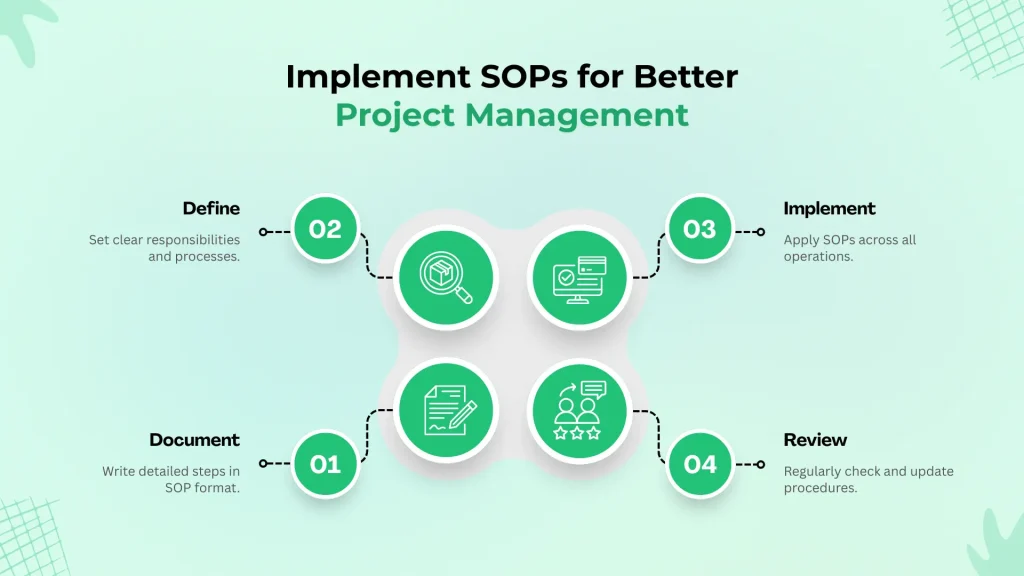
Implementing and training are critical steps after breaking custom projects into clear tasks. This phase brings your Standard Operating Procedures (SOPs) to life. It ensures everyone understands their roles and follows the defined process. Proper implementation avoids confusion and keeps the project on track.
Training helps the team use the SOPs confidently and correctly. It builds a shared understanding of expectations. Clear communication during training boosts team performance and reduces mistakes.
Start by sharing the SOP documents with your team. Explain the purpose and benefits of following these procedures. Highlight how SOPs help maintain quality and save time. Encourage questions to clear up any doubts.
Use simple language and examples to make the SOPs easy to grasp. Show how each task fits into the bigger project picture. This builds motivation and helps the team see the value of SOPs.
Organize training sessions in small groups for better interaction. Use hands-on activities to practice the steps in the SOP. Role-playing real project scenarios helps team members understand their duties.
Provide clear instructions and allow time for feedback. Repeat key points to reinforce learning. Offer follow-up support so the team can ask questions later.
Regularly update training materials as the SOP evolves. Keep sessions short and focused to maintain attention. Effective training ensures smooth project execution and consistent results.
Reviewing and improving Standard Operating Procedures (SOPs) is essential for keeping projects on track. SOPs must evolve with your project needs. Regular review ensures they remain accurate and useful. Clear, updated SOPs help teams work efficiently and avoid confusion. This section explains how to collect feedback and update SOPs regularly.
Feedback is vital for improving SOPs. Ask team members to share their experiences with the procedures. They often spot unclear steps or missing details. Use simple surveys or quick meetings to gather input. Encourage honest and specific comments. Note common issues or suggestions for changes. This helps make the SOP more practical and user-friendly.
Set a schedule to review SOPs often. Projects and tools change, so your SOPs should too. Update instructions based on feedback and new best practices. Remove outdated steps to keep SOPs clear and relevant. Communicate changes clearly to the team. This ensures everyone follows the latest procedures. Regular updates prevent errors and improve overall project quality.
Examples of project SOPs help teams follow clear, repeatable steps. These templates guide processes, reduce errors, and improve teamwork. SOPs turn complex projects into manageable tasks. They keep everyone on the same page.
Risk management SOPs identify potential project risks early. They outline steps to assess, monitor, and respond to risks. Clear roles assign who tracks and reports issues. This process minimizes surprises and project delays. Teams act quickly to reduce impact.
Communication plan SOPs define how project information flows. They list who communicates what, when, and how often. Using standard tools and channels prevents confusion. Regular updates keep stakeholders informed and engaged. This ensures smooth collaboration and fewer misunderstandings.
Client onboarding SOPs create a smooth start for new projects. They detail every step from initial contact to project kickoff. Clear instructions assign responsibilities for documents, meetings, and approvals. This builds client trust and sets expectations right. A consistent process improves client satisfaction.
The 5 parts of an SOP are: Title and Purpose, Scope, Responsibilities, Step-by-Step Procedures, and Deliverables.
Write an SOP for project management by defining its purpose, scope, roles, and step-by-step procedures. Use clear, concise language. Assign responsibilities and include timelines. Review regularly to improve efficiency and consistency. Train your team to follow the SOP for better project outcomes.
Write a clear SOP by defining its purpose and scope. Use a descriptive title and simple language. Outline step-by-step procedures and assign roles. Include responsibilities and deliverables. Review and update regularly to ensure accuracy and effectiveness.
A project SOP is a detailed guide that standardizes tasks, roles, and processes. It ensures consistency, quality, and efficiency throughout the project.
Breaking custom projects into clear tasks makes work easier and more organized. Using an SOP guides every step and avoids confusion. Assign roles clearly and follow the outlined procedures for the best results. Keep reviewing and improving your process as you go.
This simple method helps teams stay on track and finish projects well. Clear tasks and good communication lead to smoother project success.







Leave A Reply Now