


When it comes to custom projects, you face a big decision: should you handle everything with your in-house team, or bring in outside experts through outsourcing? Each choice has its own set of benefits and challenges, and the right answer depends on what matters most to you—whether it’s control, cost, speed, or expertise.
You might be wondering which option will deliver the best results without stretching your resources too thin or risking delays. You’ll discover the key differences between outsourcing and in-house work, plus practical insights to help you choose the path that fits your project’s unique needs.
Ready to find out which approach works better for your custom project? Let’s dive in.
Choosing in-house development for custom projects brings clear benefits. Companies keep project control close and ensure every detail matches their vision. The team works daily with company goals in mind. This approach suits projects needing constant updates and close supervision. It also helps maintain company secrets and build lasting team knowledge. Here are key benefits of in-house development.
In-house teams allow full control over the project. Managers can guide work directly and make quick decisions. Changes happen faster without waiting for external approval. Quality checks occur more often to keep standards high. This control reduces risks and keeps the project on track.
Working together in the same place improves team collaboration. Team members share ideas freely and solve problems fast. Communication is clear with fewer misunderstandings. Daily meetings help keep everyone aligned with goals. This teamwork speeds up progress and builds stronger relationships.
In-house development protects sensitive company information. The team handles confidential data under strict company rules. This lowers the chance of leaks or misuse. Employees understand the value of keeping secrets safe. It ensures the project stays secure from outside threats.
In-house teams grow with the company’s vision over time. They learn the business culture and customer needs deeply. This helps create solutions that fit long-term goals. The team stays motivated to improve and support the product. It builds strong, ongoing support for future updates and changes.
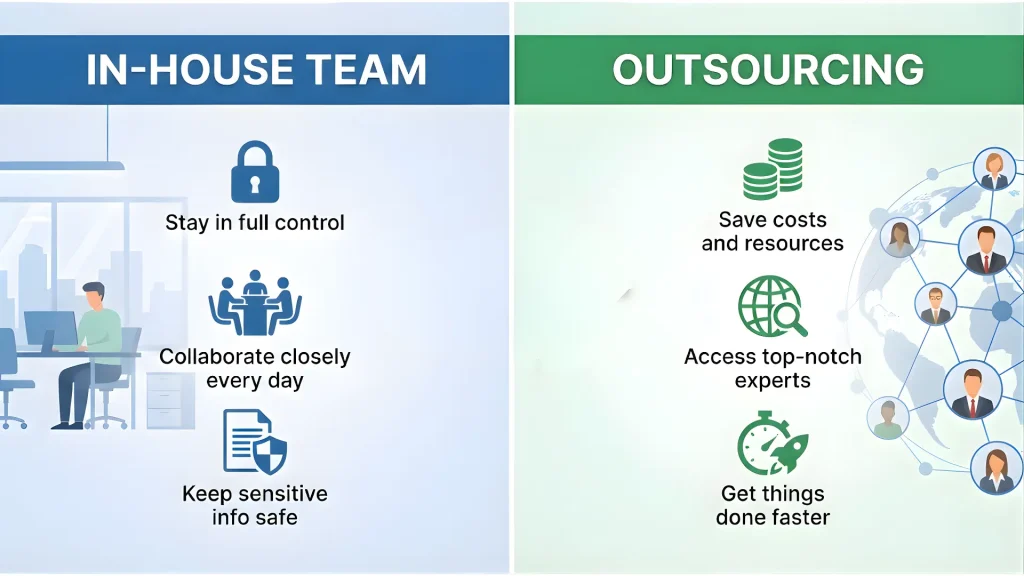
Outsourcing custom projects offers several clear benefits that many businesses find valuable. It allows companies to focus on their core activities while experts handle specific tasks. This approach often leads to better resource use and faster results.
Outsourcing reduces the need for full-time staff and office space. Companies save on salaries, benefits, and training costs. Paying only for completed work helps control budgets better. It also lowers expenses related to equipment and software.
Outsourcing connects businesses with experts in various fields. These professionals have deep knowledge and experience. This access improves project quality and innovation. It also helps handle complex tasks that in-house teams may lack.
Outsourcing teams often work around the clock due to different time zones. This allows work to continue beyond regular office hours. Specialists focus solely on the project, speeding up completion. Faster delivery helps meet tight deadlines effectively.
Outsourcing offers easy adjustment of team size based on project needs. Companies can scale up or down without long-term commitments. This flexibility supports changes in project scope or timelines. It avoids the challenges of hiring or layoffs.
In-house teams face several challenges when managing custom projects. These obstacles can affect the project’s success and overall efficiency. Understanding these challenges helps businesses decide if in-house development is the right choice.
Building an in-house team requires a significant initial investment. Costs include salaries, benefits, workspace, and equipment. These expenses continue throughout the project life. Unexpected costs may arise from software licenses or hardware upgrades. Small businesses often find these costs difficult to manage.
Finding skilled professionals takes time and effort. The hiring process can delay project timelines. Once hired, employees need training to align with company goals. Training consumes valuable time and resources. Retaining talent is also a constant challenge in competitive markets.
In-house teams rely on local talent availability. This limits access to specialized skills needed for some projects. Companies in smaller cities may struggle to find experts. The limited pool may cause delays or reduce project quality. Expanding the team quickly is often impossible.
Managing resources effectively is complex for in-house teams. Balancing workloads and deadlines requires careful planning. Overloading staff leads to burnout and lower productivity. Underutilizing employees wastes company resources. Adjusting resources for changing project needs is often slow and inefficient.
Outsourcing custom projects can save costs and provide access to skilled experts. Still, it comes with certain drawbacks that affect project success. These challenges may impact communication, control, quality, and workflow. Understanding these issues helps in making a better choice for your project needs.
Outsourcing teams often work remotely, making communication harder. Language differences can cause misunderstandings. Delays in response slow down project progress. Clear, constant communication becomes a challenge. Misinterpretation of requirements can lead to errors.
Outsourcing reduces your direct oversight on the project. You rely on external teams to manage tasks. It is harder to enforce changes quickly. Tracking daily progress becomes difficult. You may feel disconnected from the development process.
Outsourcing quality varies depending on the provider. Sometimes, the work does not meet your standards. Missed deadlines and inconsistent output may occur. You depend on external teams for reliability. Choosing the wrong partner can hurt your project.
Outsourcing teams often work in different countries. Time zone gaps create delays in meetings and feedback. Work culture differences affect collaboration styles. These differences can slow down decision-making. Aligning goals and processes takes extra effort.
Choosing between in-house and outsourcing depends on many factors. In-house teams work best for projects needing close attention. They offer better control and easier communication. This section explains when in-house is the right choice.
In-house teams give you full control over every project detail. You can quickly adjust plans and fix issues. This control helps keep the project aligned with your goals. Outsourcing may slow down decisions and reduce oversight.
Projects that need constant teamwork benefit from in-house staff. Team members can meet face-to-face and share ideas fast. Close collaboration improves problem-solving and speeds up progress. Outsourcing can create delays in communication.
Projects involving confidential data are safer with in-house teams. You can protect sensitive information better within your company. Trust is easier to maintain when staff work onsite. Outsourcing might increase risks of data leaks.
In-house teams suit projects with ongoing needs. They build deep knowledge about your business and products. Long-term staff provide consistent support and updates. Outsourcing works better for short-term or one-time projects.
Choosing between outsourcing and in-house teams depends on the project’s needs. Outsourcing works well in certain situations. It offers flexibility and access to resources that might not be available internally. Knowing when to choose outsourcing can save time and money while improving project outcomes.
Outsourcing helps when budgets are tight. It often costs less than hiring full-time staff. Companies pay only for the work done. There are no extra expenses like benefits or office space. This makes outsourcing a smart choice for saving money.
Some projects require skills that are hard to find in-house. Outsourcing gives access to experts with specific knowledge. These specialists bring experience and fresh ideas. This can lead to better quality and faster problem-solving.
Projects with a short timeline or changing scope suit outsourcing well. It allows companies to scale resources up or down easily. No need to keep staff after the project ends. Outsourcing fits projects that do not need permanent teams.
Outsourcing can speed up delivery times. External teams often work around the clock. They may have ready tools and processes in place. This helps launch products faster and meet tight deadlines.
Hybrid approaches blend the strengths of both in-house teams and outsourcing. This method allows companies to adapt to project needs and resources. It offers a balance that pure in-house or pure outsourcing can’t always achieve.
Some project parts require close control and quick changes. Those tasks fit well with in-house teams. Other parts need special skills or faster delivery. Outsourcing those tasks brings expertise and saves time. Combining both lets companies use internal knowledge and outside talent.
In-house teams keep control over core functions and sensitive data. Outsourcing provides flexibility to scale work up or down. Hybrid models let managers choose what to keep close and what to delegate. This balance helps meet deadlines and maintain quality.
Clear communication is key when mixing in-house and outsourced work. Use shared tools and regular meetings to stay aligned. Define roles and responsibilities early to avoid confusion. Track progress with simple reports. Good coordination ensures smooth project flow and timely delivery.
Cost plays a key role in choosing between outsourcing and in-house teams for custom projects. Understanding how expenses differ helps make the right decision. Costs vary in setup, ongoing needs, and unexpected charges.
In-house teams need a large upfront spend. You must pay for recruitment, training, and equipment. Setting up office space and software licenses adds to costs.
Outsourcing requires less initial money. You often pay only for the work done. No need to invest in hardware or hire employees.
In-house work means steady monthly expenses. Salaries, benefits, and office upkeep add up. These costs continue even if project demand changes.
Outsourcing offers flexible payments. You pay based on project scope and timeline. This can save money during slow periods or small projects.
Outsourcing can have extra charges. Communication delays may cause project slowdowns. Time zone differences might increase coordination effort.
Quality issues might require rework, adding costs. Vendor changes or contract negotiations can also cost time and money. These hidden expenses impact the total budget.
Project quality plays a vital role in deciding between outsourcing and in-house teams for custom projects. Quality affects user satisfaction, project success, and overall value. Understanding how each approach impacts quality helps in making the right choice for your project needs.
In-house teams work closely with the company’s goals and standards. They have direct access to resources and can maintain strict control over quality processes. This proximity allows for quick fixes and continuous improvements. Team members usually share the same vision, which leads to consistent quality. They can also follow company-specific quality guidelines more easily.
Outsourced teams often bring specialized skills and experience to the table. They follow their own quality assurance methods, which can be very effective if well managed. However, quality control depends on clear contracts and defined expectations. Regular monitoring and feedback are needed to keep the quality on track. Outsourcing can sometimes risk misalignment with the company’s quality standards without proper oversight.
Clear communication is key to maintaining high quality in both in-house and outsourced projects. It helps in setting expectations, sharing feedback, and resolving issues quickly. Poor communication leads to misunderstandings and errors that hurt quality. Frequent updates and transparent dialogue keep everyone aligned. Strong communication builds trust and ensures the project meets quality goals.
Understanding how outsourcing and in-house approaches perform in real projects helps make better decisions. Case studies and examples show practical results and challenges. These stories reveal strengths and weaknesses of each method.
Analyzing successful projects gives insight into what works well. Learning from failures helps avoid common mistakes. Both sides offer valuable lessons for managing custom projects efficiently.
Many companies choose in-house teams for projects needing deep control. For example, a tech firm developed a custom CRM system internally. This allowed close collaboration between developers and sales teams. The result was a tailored solution matching exact business needs.
Another case involved a healthcare provider creating a patient management app. The in-house team ensured compliance with strict data rules. They quickly adapted features based on user feedback. This speed and flexibility boosted user satisfaction.
Outsourcing has led to success in projects requiring special skills. A startup hired an external team to build a mobile game. The outsourced developers brought expertise in graphics and animation. This helped launch the game faster and on budget.
A retail company outsourced their website redesign to a creative agency. The agency delivered fresh design ideas and improved user experience. This led to higher online sales and better customer engagement.
Some projects failed due to poor communication in both approaches. An in-house project struggled because team members lacked clear roles. Deadlines were missed and costs rose.
Outsourced projects sometimes fail from unclear requirements. One company did not provide detailed specs to the vendor. The final product did not meet expectations and required costly fixes.
Both in-house and outsourcing need strong project management. Clear goals, regular updates, and shared understanding improve success chances.
Outsourcing offers cost savings, access to skilled experts, and faster project delivery. It reduces overhead and allows focus on core business activities. It suits projects needing specialized skills or quick scaling.
In-house development provides full control over project processes and frequent collaboration. It ensures better alignment with company culture and proprietary knowledge. This approach suits projects requiring tight management and customization.
Outsourcing typically lowers upfront and ongoing costs by avoiding hiring and infrastructure expenses. In-house teams involve higher fixed costs but offer long-term control. Cost efficiency depends on project scope and duration.
Choose in-house when projects demand confidentiality, constant communication, and deep integration with internal teams. It is ideal for complex projects needing frequent iteration and proprietary technology protection.
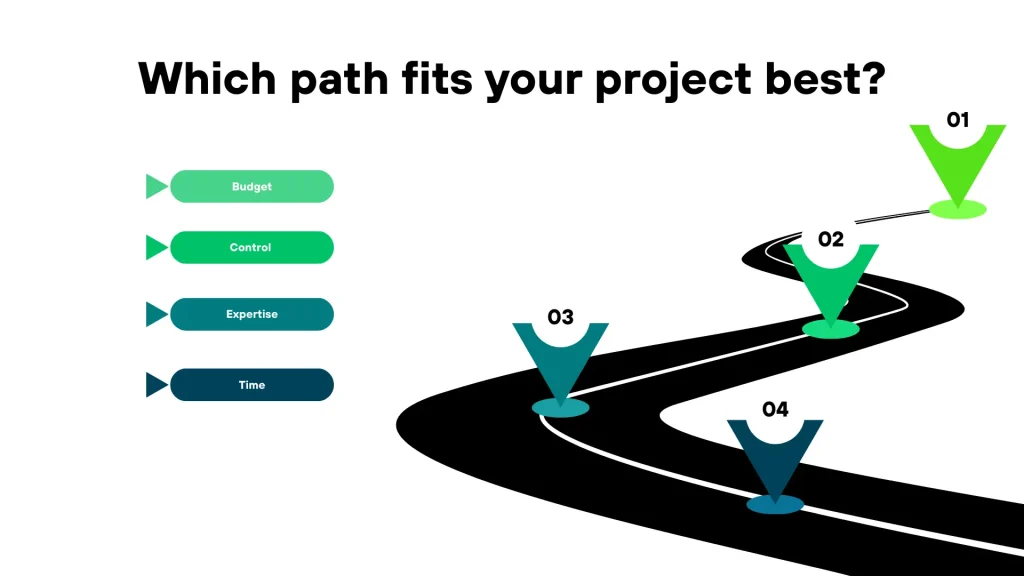
Choosing between outsourcing and in-house depends on your project needs. In-house teams offer close control and easier communication. Outsourcing can save money and bring specialized skills fast. Consider your budget, timeline, and the level of collaboration required. Small projects may benefit from in-house focus.
Larger or complex tasks might suit outsourcing better. No one size fits all. Assess what matters most for your custom project success. Balance cost, quality, and flexibility to make the best choice.







Leave A Reply Now