


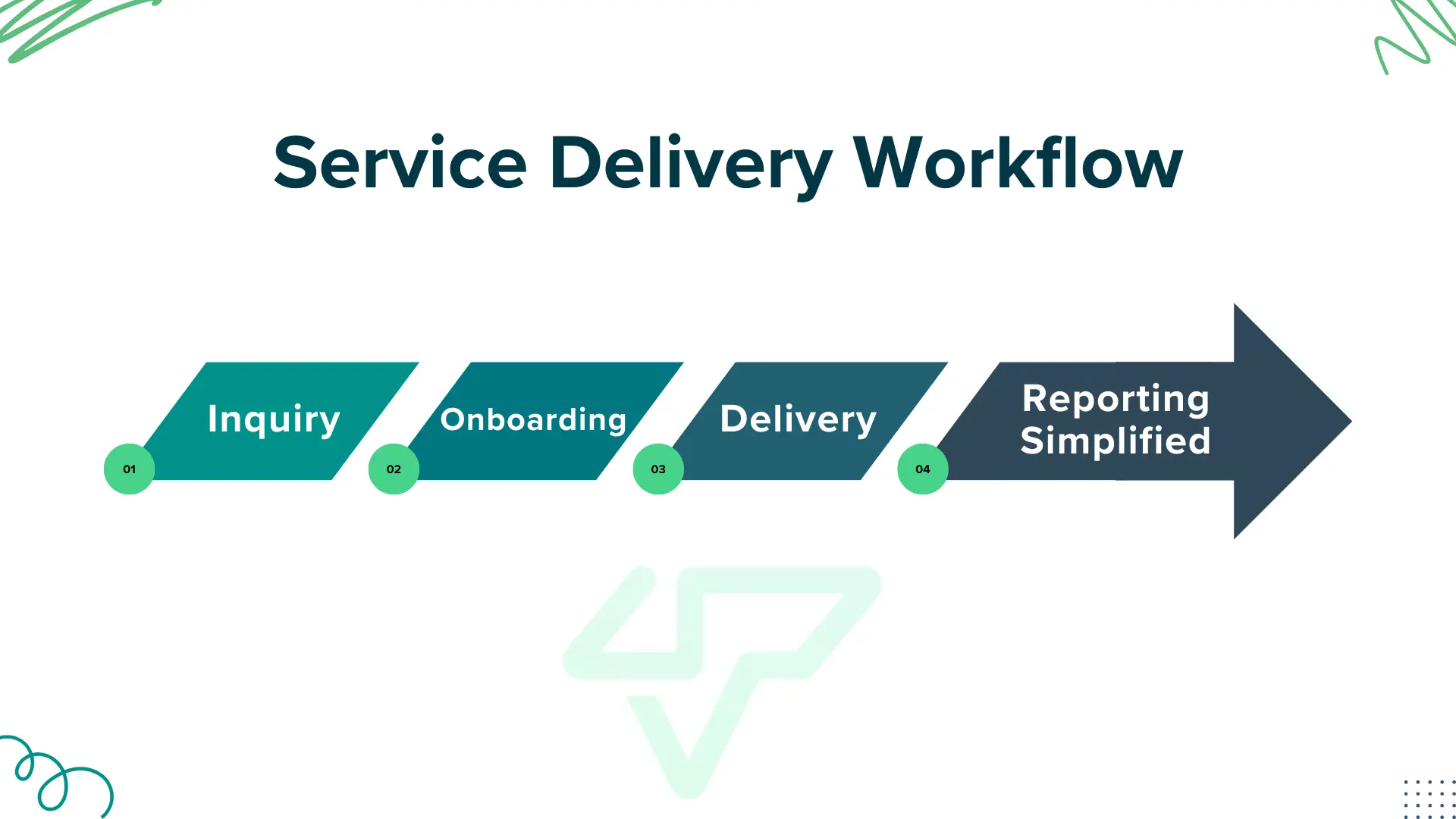
When it comes to delivering exceptional services, having a clear and efficient workflow is your secret weapon. Imagine a smooth journey that starts the moment a potential client reaches out to you and continues seamlessly through onboarding, service delivery, and reporting.
This structured path—Inquiry → Onboarding → Delivery → Reporting—not only keeps your team organized but also ensures your clients feel valued and informed every step of the way. You’ll discover how mastering each stage of the service delivery workflow can boost your customer satisfaction, improve your team’s efficiency, and help you stand out in a competitive market.
Ready to transform your service approach? Let’s dive in.
The Inquiry Phase starts the service delivery workflow. It is the first step where potential customers reach out. This phase sets the tone for the entire service experience. Clear communication and understanding are crucial here. It builds trust and opens the door for a successful partnership.
Engaging customers early creates a positive first impression. Respond promptly to questions or requests. Use simple language that customers easily understand. Show genuine interest in their needs. This helps build a strong connection from the start.
Identify what the customer truly requires. Ask clear, focused questions to gather important details. Listen carefully to their answers without interruptions. This ensures accurate understanding of their goals. Accurate needs assessment leads to better service solutions.
Explain clearly what customers can expect next. Outline the process, timelines, and possible outcomes. Be honest about any limitations or challenges. Setting realistic expectations prevents misunderstandings later. It builds confidence and transparency between both parties.
The onboarding process is a vital step in the service delivery workflow. It sets the stage for a smooth start and long-term success. This phase ensures that new team members understand their roles and the company’s expectations clearly. It also builds a foundation of trust and connection. Effective onboarding reduces confusion and boosts confidence early on.

New hires must complete all required paperwork quickly. This includes contracts, tax forms, and safety documents. Clear communication about company policies helps avoid misunderstandings. Compliance ensures everyone follows legal and company standards from day one.
Each new team member needs a clear job description. Explaining duties and responsibilities prevents overlap and gaps. It shows how their role fits into the company’s bigger picture. Setting performance goals early guides their daily work and growth.
Introducing company values and history helps new hires feel connected. Understanding workplace norms improves teamwork and communication. Cultural integration creates a sense of belonging and shared purpose. It makes employees more engaged and motivated.
Building strong relationships is key to successful onboarding. Assigning a mentor or buddy provides support and guidance. Scheduling meetings with managers and peers fosters open communication. These connections help new hires adjust faster and feel valued.
Boosting confidence helps new employees perform well early on. Regular check-ins allow managers to give feedback and answer questions. These meetings identify challenges before they grow. Consistent support builds trust and encourages continuous improvement.
Service delivery forms the core of any successful business operation. It involves turning plans into action and meeting customer needs effectively. This stage covers everything from preparing the service to completing it and ensuring client satisfaction.
Clear steps and smooth coordination are essential for a strong service delivery process. Each part must work well to deliver value and build trust with customers.
Planning sets the foundation for service delivery. Teams create detailed roadmaps outlining tasks, timelines, and goals. They design workflows that match client needs and company capabilities. Proper planning avoids confusion and delays later.
Allocating the right resources ensures the service runs smoothly. This includes people, tools, and materials needed for delivery. Managers assign tasks based on skills and availability. Efficient resource use reduces costs and improves outcomes.
Execution puts the plan into action. Teams follow schedules and communicate constantly to stay aligned. Coordinating efforts across departments keeps the process on track. Quick problem-solving helps handle unexpected challenges.
Quality assurance checks the service meets standards and client expectations. Regular reviews and testing catch issues early. Feedback loops help improve service continuously. High quality builds customer loyalty and protects company reputation.
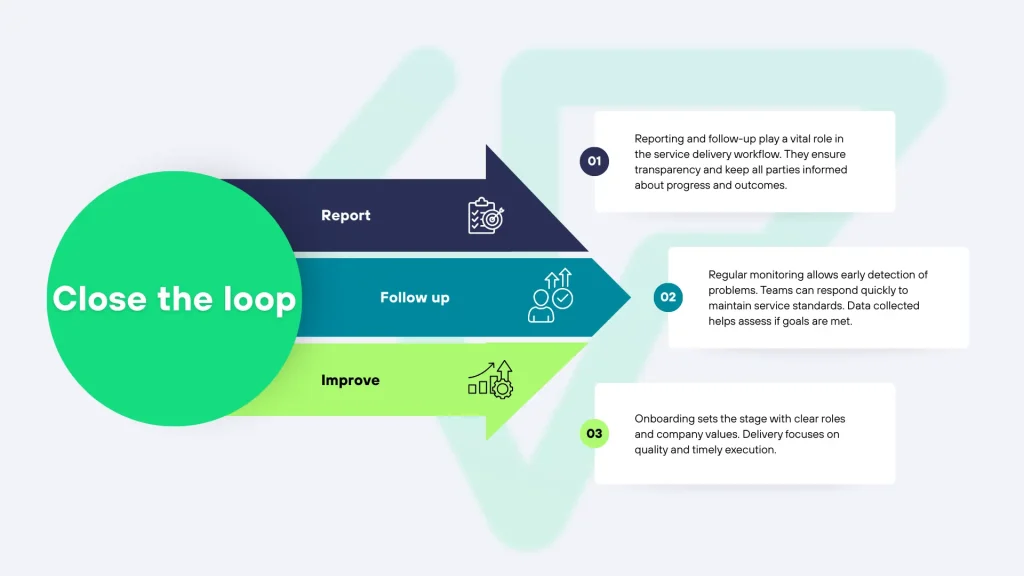
Reporting and follow-up play a vital role in the service delivery workflow. They ensure transparency and keep all parties informed about progress and outcomes. This phase helps track service effectiveness and highlights areas needing attention. It closes the loop between delivery and client satisfaction.
Clear reporting provides data for decision-making. Follow-up actions address concerns and improve future service. Together, they build trust and support long-term relationships.
Performance monitoring tracks key metrics during service delivery. It measures quality, timeliness, and customer satisfaction. Regular monitoring allows early detection of problems. Teams can respond quickly to maintain service standards. Data collected helps assess if goals are met.
Feedback collection gathers client opinions and experiences. It uses surveys, interviews, or direct communication. Honest feedback reveals strengths and weaknesses. It guides adjustments to better meet client needs. Listening to feedback shows clients their voice matters.
Issue resolution addresses problems reported by clients or staff. Swift action prevents minor issues from growing. A clear process ensures concerns are tracked and solved. Communicating solutions builds client confidence. Resolving issues improves overall service quality.
Continuous improvement uses reporting insights to enhance services. Teams analyze data and feedback for patterns. They implement changes to prevent recurring problems. Ongoing refinement raises efficiency and client satisfaction. It creates a culture of learning and growth.
The 5 C’s of onboarding are Compliance, Clarification, Culture, Connection, and Confidence. They ensure understanding policies, defining roles, embracing culture, building relationships, and boosting confidence.
The service delivery process includes inquiry, onboarding, delivery, and reporting. It ensures efficient service through planning, execution, and follow-up.
An onboarding workflow guides new hires through tasks like paperwork, training, and introductions. It ensures smooth integration into the company culture and role.
The 5 pillars of onboarding are Compliance, Clarification, Culture, Connection, and Confidence. They ensure understanding policies, role clarity, cultural immersion, relationship building, and job confidence.
A clear service delivery workflow helps teams work smoothly and meet client needs. Starting from inquiry, each step builds trust and understanding. Onboarding sets the stage with clear roles and company values. Delivery focuses on quality and timely execution. Reporting offers insights and ensures continuous improvement.
Following this process reduces errors and boosts customer satisfaction. Simple steps make complex services easier to manage. Keep the flow steady for better results every time.







Leave A Reply Now